
The Ultimate Guide to Taekwondo: Benefits, Techniques, and Philosophy
Introduction
Taekwondo is more than just a martial art; it’s a way of life. Originating in Korea, Taekwondo combines powerful techniques, mental discipline, and philosophical principles to create a holistic practice. With its emphasis on kicks, self-control, and respect, Taekwondo has become one of the most popular martial arts in the world. This guide will walk you through the benefits, techniques, and philosophy that define this incredible practice.
What Is Taekwondo?
Taekwondo, which translates to “The Way of the Foot and Fist,” is a Korean martial art that emphasizes striking techniques, particularly powerful kicks. It originated in the 1940s and 1950s, combining elements of traditional Korean martial arts with influences from Chinese and Japanese practices. Today, it is recognized globally as both a martial art and an Olympic sport.
Key Benefits of Taekwondo
Physical Benefits
- Improved Flexibility: Taekwondo’s dynamic kicks and stretches enhance range of motion.
- Increased Strength: Training builds core and leg muscles for explosive power.
- Better Balance and Coordination: Practicing stances and movements improves stability and motor skills.
- Cardiovascular Health: Intense training sessions provide a full-body workout.
Mental Benefits
- Discipline: Structured training encourages focus and perseverance.
- Confidence: Mastering techniques and advancing in rank boosts self esteem
- Self-DefenseTaekwondo equips practitioners with effective techniques to defend themselves in real-life situations, emphasizing quick reflexes and precise strikes.
Cultural and Community Connections
Taekwondo promotes respect for Korean culture and fosters camaraderie among practitioners worldwide.
Stress Relief: Physical activity and meditation promote relaxation and mental clarity
Core Techniques and Movements
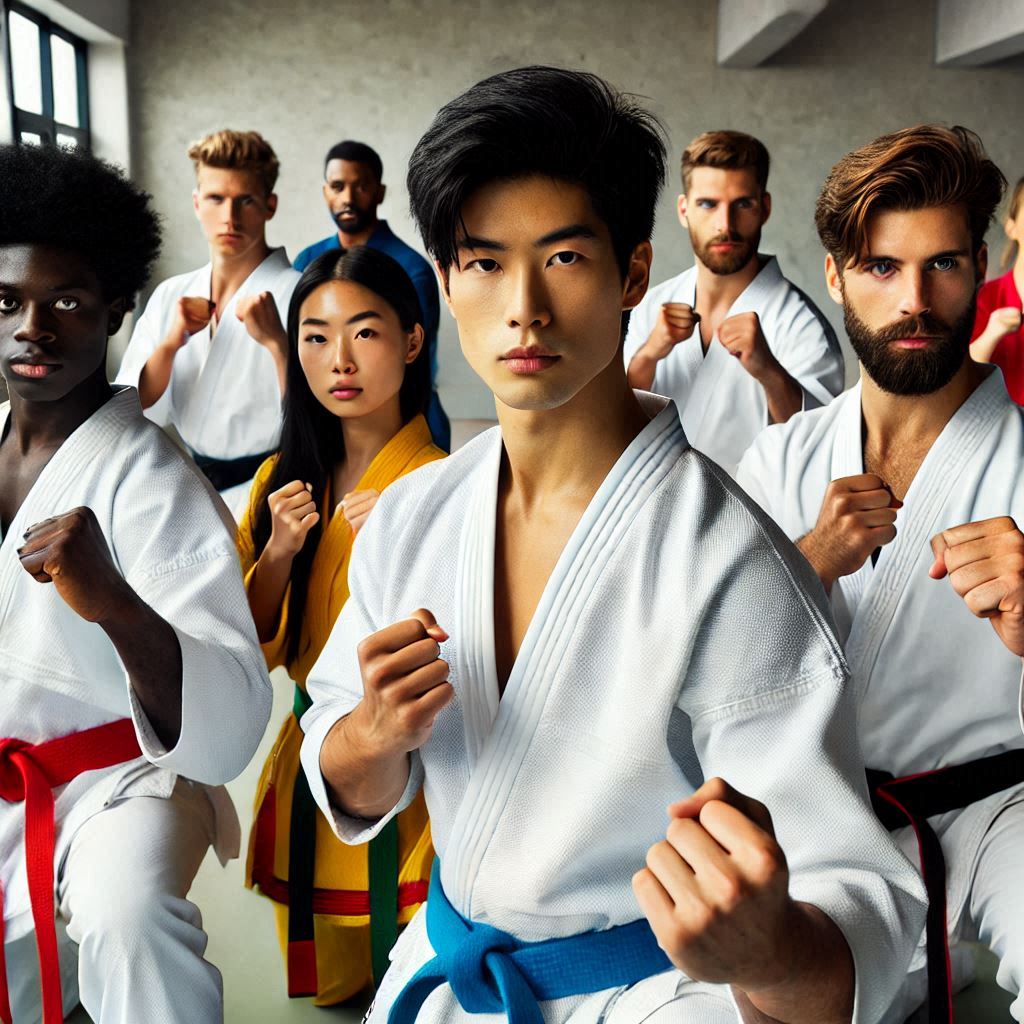
Mastering the Art: Professional Karate Practitioners in Action. ?? Basic Stances
- Attention Stance (Charyeot Seogi): A preparatory stance for focus and respect.
- Horse-Riding Stance (Juchum Seogi): A wide stance for stability and strength.
Strikes and Punches
- Straight Punch (Jireugi): A foundational technique for power and precision.
- Knife-Hand Strike (Sonkal Taerigi): A versatile strike using the edge of the hand.
Kicks
- Front Kick (Ap Chagi): A simple yet effective forward kick.
- Roundhouse Kick (Dollyo Chagi): A dynamic kick targeting the opponent’s side.
- Spinning Hook Kick (Dwi Huryeo Chagi): An advanced kick requiring balance and timing.
Blocks
- Low Block (Arae Makgi): Defends against lower-body attacks.
- High Block (Eolgul Makgi): Protects the head and upper body.
Philosophy of Taekwondo
Taekwondo is rooted in a set of guiding principles that extend beyond physical practice. These values shape practitioners’ character and approach to life.
The Five Tenets of Taekwondo
- Courtesy (Ye Ui): Respect for others and adherence to etiquette.
- Integrity (Yom Chi): Upholding honesty and moral principles.
- Perseverance (In Nae): Staying determined despite challenges.
- Self-Control (Geuk Gi): Managing emotions and impulses.
- Indomitable Spirit (Baekjul Boolgool): Facing adversity with courage and resilience.
The Dojang Code
Most Taekwondo schools, or dojangs, emphasize discipline, mutual respect, and lifelong learning. Students bow to their instructors and peers, acknowledging the value of humility and gratitude.
How to Get Started in Taekwondo
Finding the Right School
- Look for a certified dojang with qualified instructors.
- Check the school’s focus—whether traditional, sport, or self-defense.
What to Expect in Your First Class
- Warm-up exercises to prevent injuries.
- Learning basic stances, punches, and kicks.
- An emphasis on etiquette, such as bowing and addressing instructors respectfully.
Tips for Beginners
- Be patient—mastery takes time.
- Focus on fundamentals before advancing to complex techniques.
- Practice regularly, even outside class, to build muscle memory.
Frequently Asked Questions
Is Taekwondo suitable for all ages?
Yes! Taekwondo classes are available for children, adults, and seniors, making it accessible to everyone.
How long does it take to earn a black belt?
On average, it takes 3-5 years of consistent training to achieve a black belt, depending on the school and individual progress.
Do I need special equipment to start?
Beginners typically need a uniform (dobok) and a positive attitude. As you advance, you may invest in sparring gear.
How does Taekwondo differ from other martial arts?
Taekwondo’s emphasis on high, fast kicks and its Olympic status distinguish it from martial arts like karate or judo.
Conclusion
Taekwondo offers a unique blend of physical training, mental discipline, and philosophical values. Whether you’re looking to improve fitness, learn self-defense, or embrace a new way of life, Taekwondo has something for everyone. Start your journey today, and discover how this martial art can transform your body and mind.




Post Comment