
The History of Football: From Its Origins to Global Fame
The History of Football: From Its Origins to Global Fame
Introduction
Football, often referred to as “the beautiful game,” is the world’s most popular sport. Its universal appeal lies in its simplicity, accessibility, and ability to bring people together across cultures and continents. But how did football evolve into the global phenomenon it is today? This article explores the rich history of football, from its ancient origins to its rise as a unifying global force.
Origins of Football
Ancient Beginnings
- China: The earliest known form of football, called Cuju (meaning “kick ball”), originated in China around 2,000 BCE. It was played as a military training exercise.
- Greece and Rome: In ancient Greece, a game called Episkyros involved teams passing a ball. Similarly, the Romans played Harpastum, which emphasized teamwork and strategy.
- Mesoamerica: Indigenous cultures in Central America played ball games like Ulama, although these were more ceremonial and sometimes involved heavy rubber balls.
Medieval Football
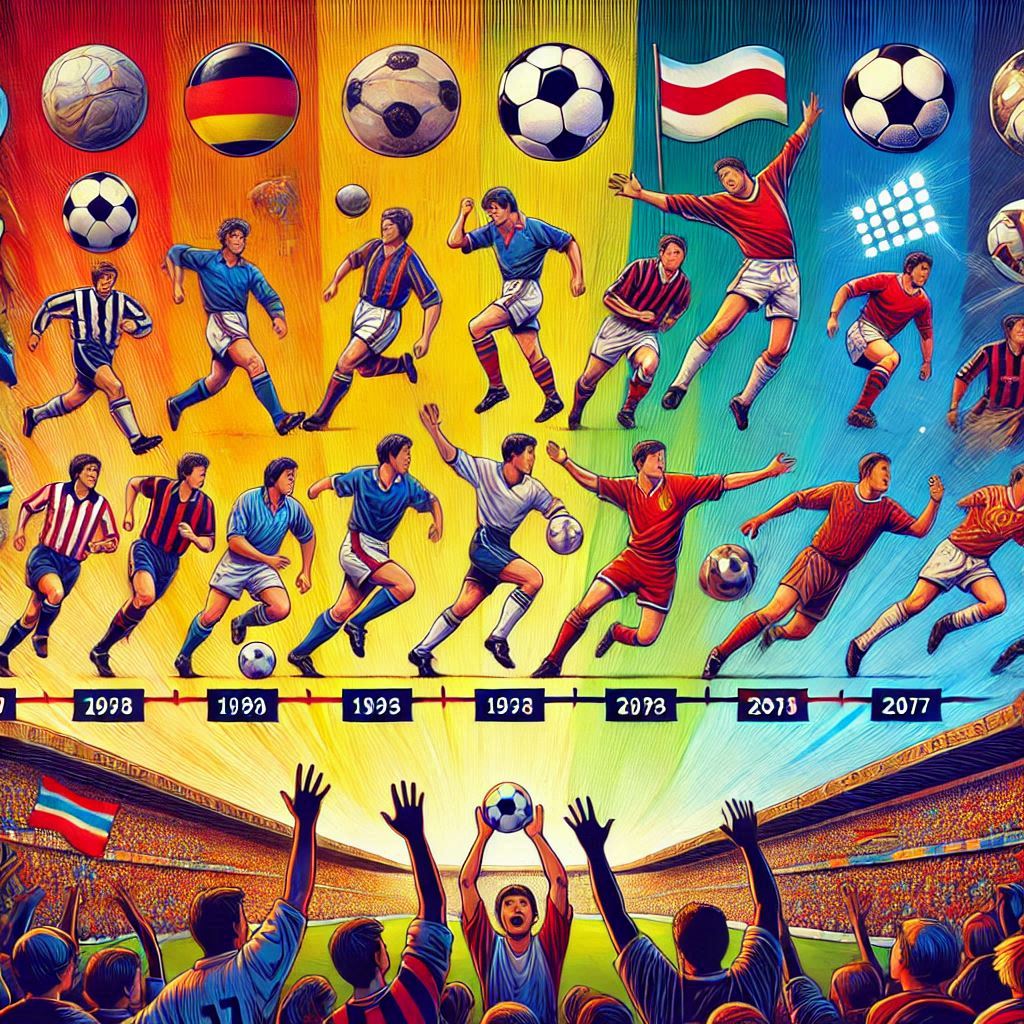
- In medieval Europe, rudimentary forms of football were played during festivals. These matches were chaotic, often involving entire villages and very few rules.
- The games were frequently banned by monarchs due to their rowdiness and potential for injuries.
The Birth of Modern Football
England: The Cradle of Football
- In the 19th century, football began to take its modern form in England. Public schools like Eton and Harrow developed standardized rules to make the game more structured.
- 1863 marked a pivotal moment when the Football Association (FA) was established in London, creating a uniform set of rules and distinguishing football from rugby.
Spread Across Europe
- By the late 19th century, football had spread to other European countries like Italy, Spain, and Germany. Clubs formed, and national competitions began to take shape.
Football Goes Global
Formation of FIFA
- In 1904, the Federation Internationale de Football Association (FIFA) was founded in Paris to oversee international competition.
- FIFA played a crucial role in organizing the first World Cup in 1930, held in Uruguay, which further popularized the sport globally.
Key Milestones
- Olympics: Football became an Olympic sport in 1908, further boosting its international appeal.
- World Cup: The FIFA World Cup, held every four years, is now the most-watched sporting event in the world.
- Women’s Football: The growth of women’s football, highlighted by the FIFA Women’s World Cup, showcases the sport’s inclusivity and global reach.
Football as a Cultural Phenomenon
Community and Identity
- Football is deeply ingrained in the identities of nations, cities, and clubs. Rivalries like El Clásico (Real Madrid vs. Barcelona) and the North West Derby (Liverpool vs. Manchester United) are celebrated worldwide.
- Local clubs often become symbols of pride and unity for their communities.
Pop Culture
- Football has influenced music, film, and fashion, with players like Pelé, Diego Maradona, and Lionel Messi becoming global icons.
- Sponsorships and endorsements have turned football into a multi-billion-dollar industry.
The Future of Football
Innovations and Challenges
- Technology: The introduction of VAR (Video Assistant Referee) and wearable fitness trackers is transforming how the game is played and officiated.
- Globalization: Emerging markets in Asia, Africa, and the Americas are becoming hotbeds for talent and fan engagement.
- Sustainability: Efforts are being made to make football more environmentally friendly, from eco-stadiums to sustainable kits.
Unifying the World
- Football’s power to unite was exemplified during the 2010 FIFA World Cup in South Africa, the first held on the African continent. The event showcased Africa’s passion for the sport and brought nations together.
Conclusion
From ancient ball games to the FIFA World Cup, football has transcended time and borders to become a universal language of joy, competition, and unity. As the sport continues to evolve, its legacy as “the beautiful game” remains intact, inspiring generations to come.







Post Comment