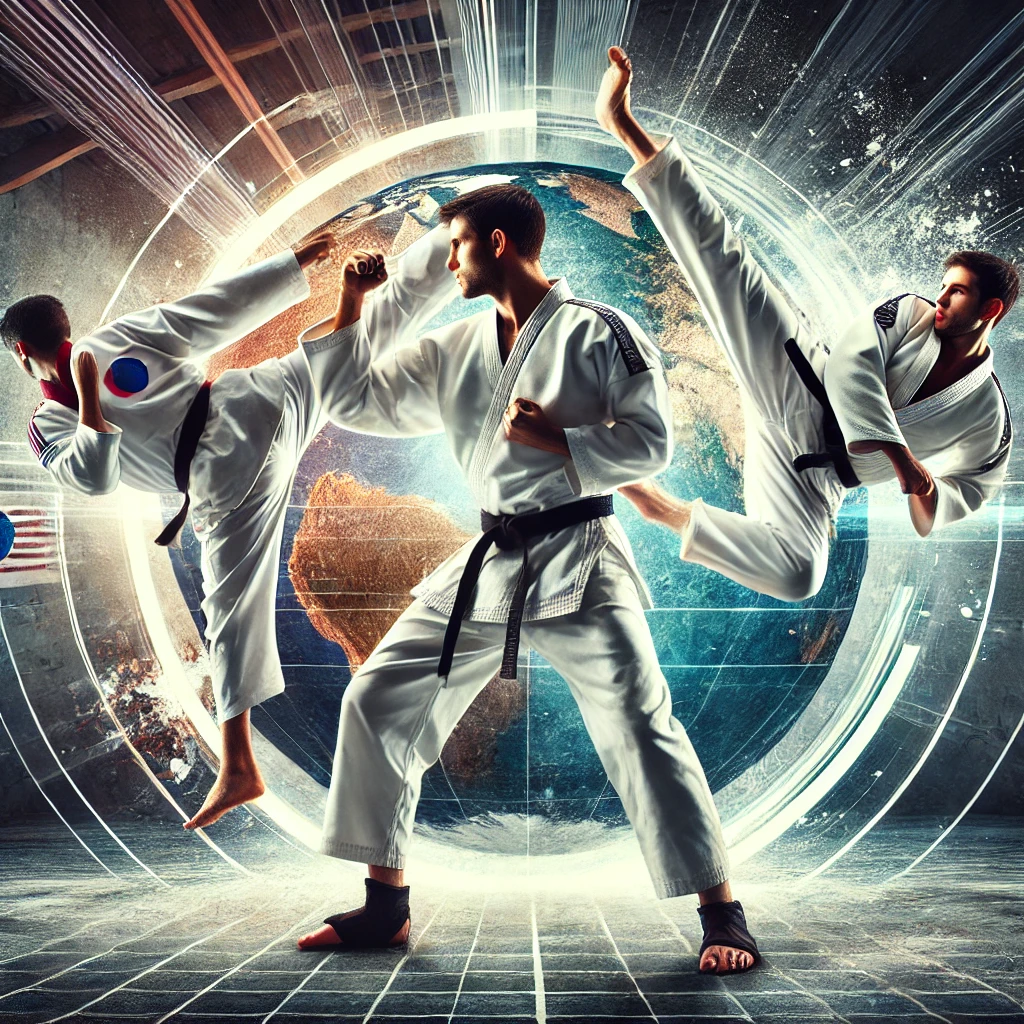
The Ultimate Guide to Martial Arts: Karate, Taekwondo, and Judo
The Ultimate Guide to Martial Arts: Karate, Taekwondo, and Judo
Introduction
Martial arts have a rich history and offer a unique combination of physical and mental benefits. Whether you’re looking to improve fitness, learn self-defense, or train in a discipline that promotes respect and discipline, martial arts can provide all of that and more. Among the many styles practiced worldwide, Karate, Taekwondo, and Judo are three of the most popular and well-known disciplines. Each has its own unique techniques, philosophies, and approaches to combat.
In this guide, we’ll dive into the differences between Karate, Taekwondo, and Judo, discuss basic moves, explore protective gear, and talk about risk management during practice.
1. Differences Between Martial Arts Disciplines
- Karate: Karate originated in Okinawa, Japan, and is a striking martial art that emphasizes powerful punches, kicks, knee strikes, and elbow strikes. The primary goal is to develop strong, precise techniques, self-discipline, and focus. Karate practitioners train in kata (pre-arranged forms), kumite (sparring), and kihon (basic techniques). The sport promotes the balance between physical and mental strength, with a heavy focus on respect and the ethical behavior of the practitioner.
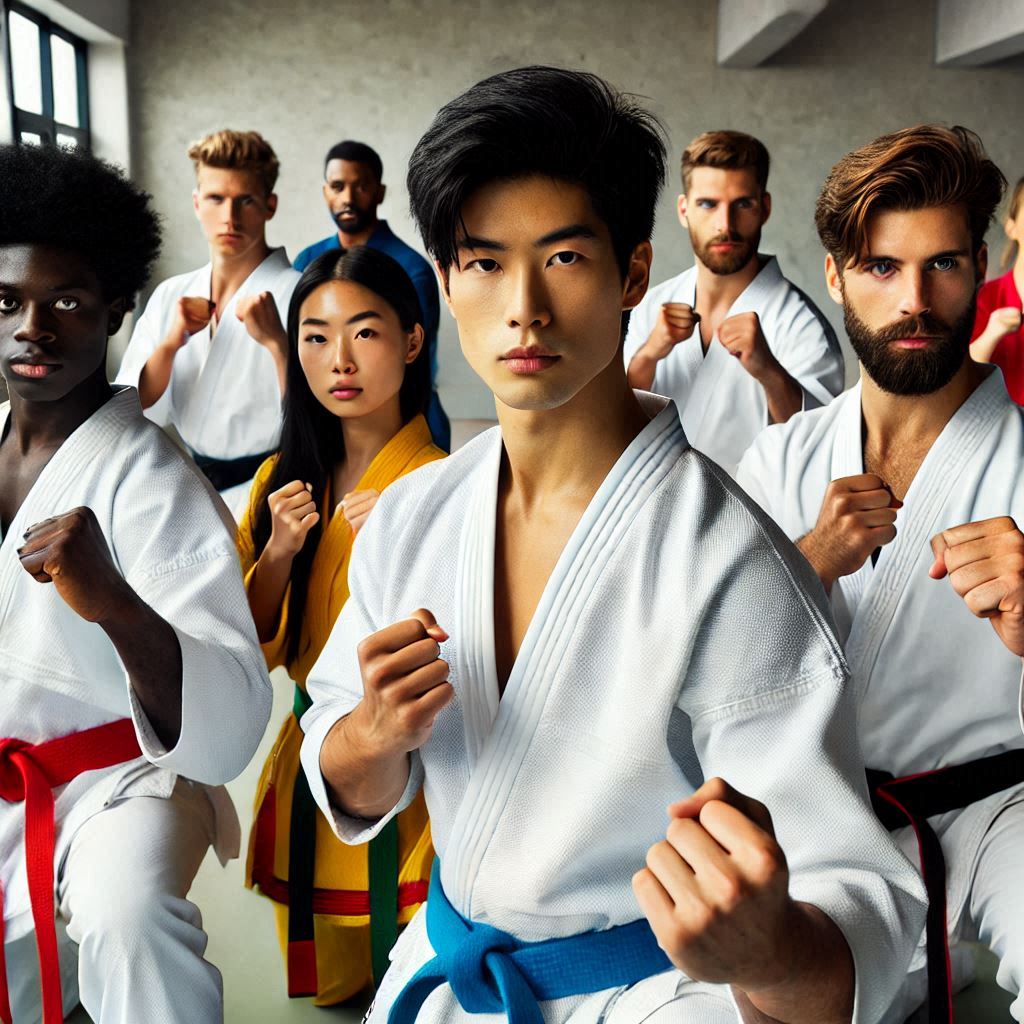
- Taekwondo: Taekwondo is a Korean martial art that is known for its high-flying kicks, speed, and dynamic movements. While Taekwondo also involves hand strikes, the focus is primarily on powerful and acrobatic kicks, especially those delivered from high positions. Taekwondo emphasizes speed, flexibility, and agility, making it one of the most visually dynamic martial arts. It has gained global popularity and is even an Olympic sport. Training includes patterns (known as poomsae), sparring, and self-defense techniques.

- Judo: Judo, developed in Japan, is a grappling-based martial art focused on throws, joint locks, and pins. Unlike Karate and Taekwondo, Judo does not emphasize striking. The main objective in Judo is to use an opponent’s energy and balance against them to gain control. Training involves learning how to throw an opponent to the ground, perform joint locks, and pin them on their back. Judo is both a physical and mental challenge, requiring agility, precision, and tactical awareness.

2. Basic Moves in Karate, Taekwondo, and Judo
- Karate:
- Punches: One of the core techniques in Karate is the straight punch (Oizuki) delivered with precision and force. The punch is performed with the fist while ensuring that the body is aligned and balanced.
- Kicks: Front kick (Mae Geri) and roundhouse kick (Mawashi Geri) are commonly used. The front kick is a basic defensive technique, while the roundhouse kick aims to strike the opponent’s head or torso.
- Blocks: Karate includes a variety of blocking techniques, such as the high block (Age Uke) to protect against strikes to the head and the downward block (Gedan Barai) for lower body protection.
- Taekwondo:
- Kicks: Taekwondo is famous for its spin kicks and high kicks. The front kick (Ap Chagi) is basic and used to push an opponent away, while the roundhouse kick (Dollyo Chagi) is often used to strike the head or body. Axe kicks (Naeryo Chagi) and back kicks (Dwi Chagi) are also common in Taekwondo.
- Hand Techniques: Though primarily focused on kicking, Taekwondo also incorporates hand techniques, such as the knife-hand strike (Sonkal Chigi), which targets an opponent’s vulnerable areas.
- Blocking: Low block (Arae Makgi) and high block (Eolgul Makgi) are used for defensive purposes.
- Judo:
- Throws: One of the signature techniques in Judo is the hip throw (O Goshi), where the practitioner uses their hip to toss the opponent to the ground. Other throws include shoulder throws (Seoi Nage) and leg sweeps (De Ashi Barai).
- Joint Locks: Judo practitioners learn to execute joint locks, such as the arm lock (Ude Garami), to force an opponent into submission.
- Pins: Judo also involves pins, where a practitioner holds an opponent’s back flat against the mat for a set period of time, securing victory.
3. Protective Gear in Martial Arts

- Karate:
- Karate Gi (uniform): Traditional martial artists wear a Gi made of durable fabric.
- Mouthguards: To protect teeth from potential strikes.
- Gloves and Foot Gear: Some competitions require gloves and foot protection to minimize injuries during sparring.
- Chest Guards and Headgear: Depending on the intensity of the practice, protective gear like headgear and chest protectors may be used, especially in full-contact events.
- Taekwondo:
- Dobok (uniform): Taekwondo practitioners wear a Dobok, similar to Karate’s Gi but usually lighter.
- Protective Gear: In sparring, practitioners wear headgear, chest protectors, shin guards, arm guards, and mouthguards to prevent injuries.
- Gloves: To protect the hands during sparring sessions.
- Judo:
- Judo Gi: The uniform is slightly thicker than those used in Karate or Taekwondo, designed to withstand the grabbing and pulling that is central to the discipline.
- Mouthguards: For teeth protection, especially during sparring.
- No Protective Gear: Judo does not generally use extensive padding or helmets during practice, but some safety measures may be in place during tournaments.
4. Risk Management During Practice
- Karate and Taekwondo:
- Warm-ups and Stretching: It’s essential to properly warm up before training to avoid muscle strains and injuries. Stretching before and after practice helps maintain flexibility and reduces the risk of muscle injuries.
- Supervision and Proper Technique: Practicing under the supervision of a qualified instructor ensures that techniques are performed correctly, minimizing the risk of injury.
- Gradual Progression: It’s important to start slowly and build strength, flexibility, and endurance over time rather than pushing your body too hard too soon.
- Judo:
- Learning to Fall: In Judo, one of the most critical skills is Ukemi (falling techniques). Learning how to fall safely is crucial to prevent injuries when being thrown to the ground.
- Controlled Sparring: Judo sparring (Randori) should be done in a controlled manner, with respect for your partner’s safety. Practitioners should avoid applying joint locks or throws with excessive force.
- Strength and Conditioning: Judo requires significant strength and conditioning, so it’s important to prepare the body through exercises that enhance balance, flexibility, and strength.
Conclusion
Martial arts such as Karate, Taekwondo, and Judo offer incredible benefits, including improved fitness, mental focus, and self-defense skills. Each discipline has its own unique focus—whether it’s the precision of Karate, the acrobatic kicks of Taekwondo, or the throws and grappling of Judo. Regardless of which martial art you choose, the key to success lies in consistent training, respect for others, and a commitment to safety.
So, whether you’re looking to build strength, learn self-defense, or compete, martial arts is a great way to achieve your goals. Try them out and experience the transformative power they offer!




Post Comment